Curation
What makes a great dinner-table conversation.

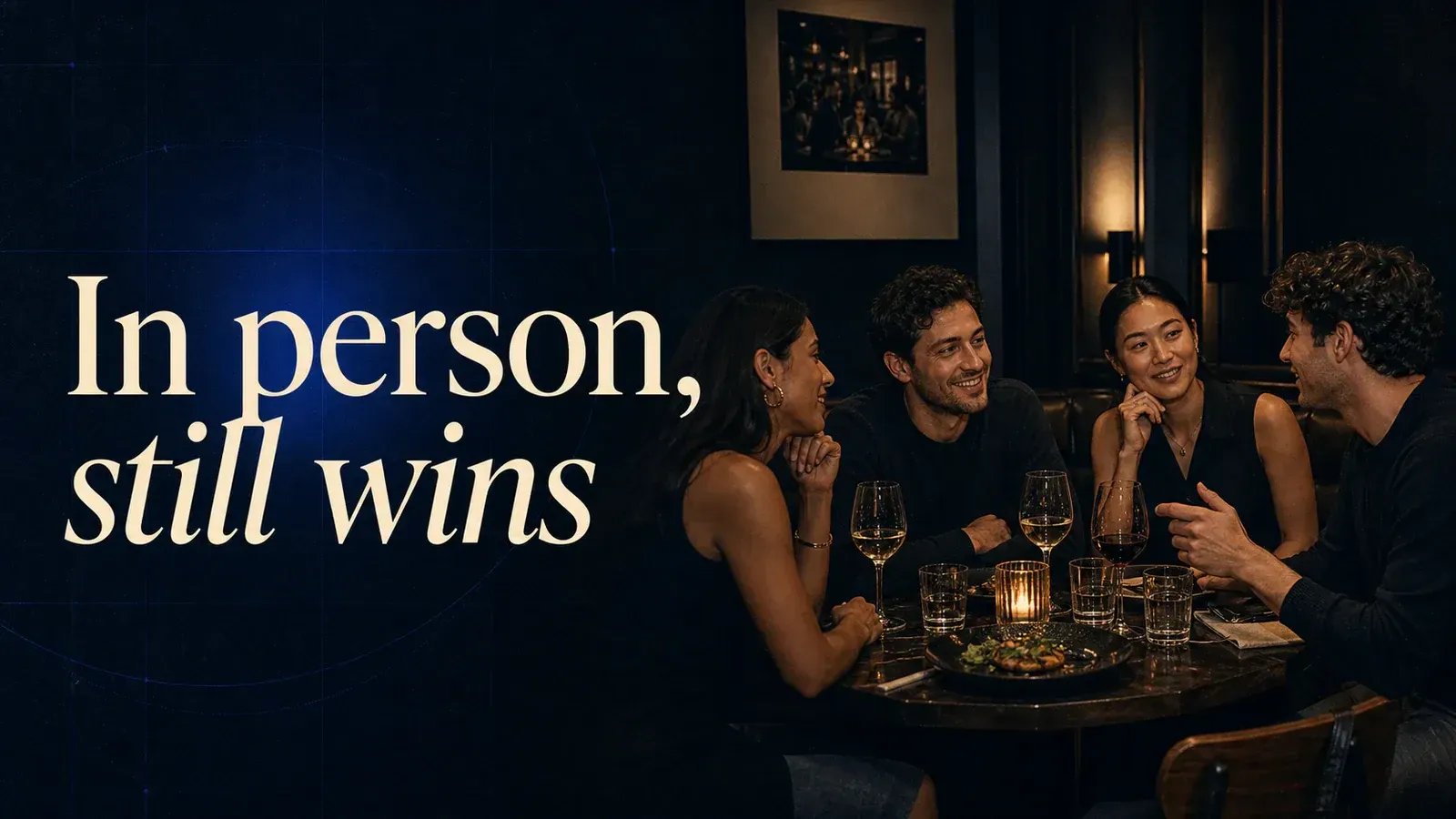
The conversations you remember from a great dinner do not happen by accident. They happen because the table was put together with care, the right number of people sat down, and nobody at the table was trying to win the night. Everything else, the menu, the lighting, the clever opening question, is downstream of those three conditions.
This is the part most people get backwards. They worry about the venue, the wine list, what to wear. They overlook the only variable that actually controls the night: who else is at the table. At a curated dinner, the table is the product. The restaurant is the wrapper.
Curation is the work
Curation, in the After Business Club sense, is the act of composing a room before anyone sits down. We read every profile, look at the city, the stage, the kind of business someone runs, and the kind of room they would actually want. The table is then built from people whose overlap is interesting and whose differences are useful.
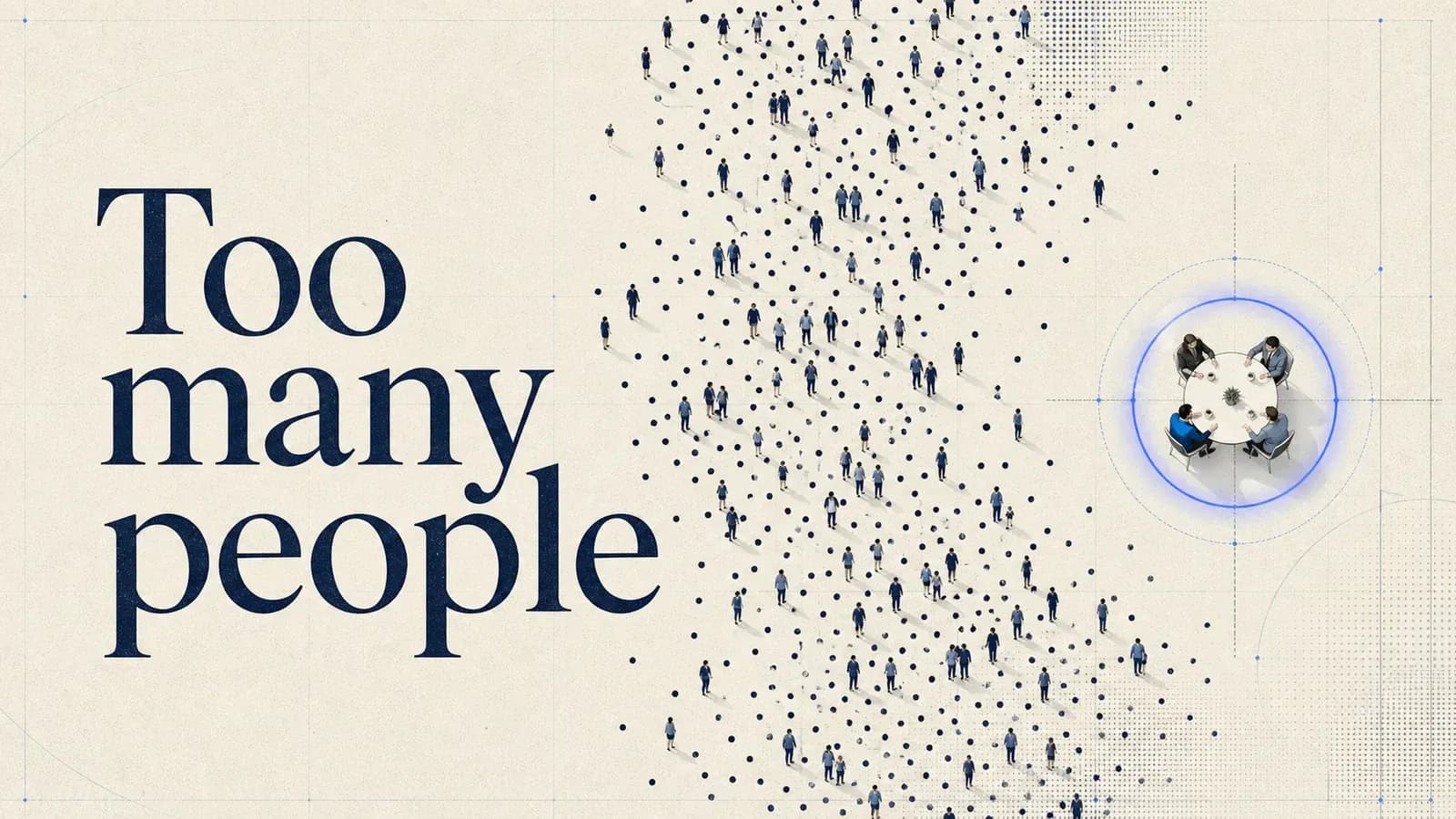
Curation is also the part that does not scale. A larger room dilutes the work. A self-selected room reverses it. A table assembled on purpose, where every seat is chosen for a specific reason, produces conversation that a random gathering of the same people would never reach.
The 60/30/10 composition rule
When the ratio is right, nobody is performing because nobody is the senior person in the room. The wildcard keeps the table from feeling like a peer support group. The different-vantage seats keep the conversation from echo-chambering. The shared-season majority keeps the language tight and the references useful.
Why six is the magic number
Six is the largest table where everyone stays in a single conversation. Push past it and the table splits into halves, and the night becomes two dinners no one fully remembers. Drop below it and you can feel the silences open up. Hold it at six and the whole table can hear the same story and react to it in the same beat, which also happens to sit right at the limit of what most people can keep in active working memory during a meal, the cognitive argument we unpack more fully in Why small groups beat big rooms.
Once a group outgrows six, the format changes shape. The conversation breaks up, the loudest voice dominates, and people remember less of the night. That is not a flaw to manage around. It is the size telling you what kind of event you actually have.
What kinds of members make tables better
Some kinds of guests make tables better. Others quietly take from them. The patterns show up at every well-composed table.
None of this is etiquette. It is the difference between a member who makes the next table better and one who makes the next table harder to compose.
The arc of a great table
Most great dinners follow a similar arc. The first hour is credentialing, where the room finds out who is doing what and at what scale. The second hour is calibration, where opinions show up and the conversation starts to slope toward something specific. The third hour is the reason the dinner exists, where someone says the thing they would not have said in a meeting and the table responds to it together.
The first hour is necessary. The third hour is the one you remember. Most relationships that compound from a dinner table form somewhere between the second and the third hour, often around a story the room reacts to in the same beat.
When the conversation stalls
Even great tables hit a flat patch around the second course. On well-composed tables, the reset usually happens on its own. Someone notices the lull and shifts the topic without making it a moment. The room breathes and resumes. A few of the patterns that consistently work, regardless of who is at the table.
- A specific question to the quietest person, the kind only they could answer.
- A short, faintly self-deprecating story that lowers the altitude of the room.
- A move from a clever question to a real one. "What is the last thing you changed your mind about?" lands more reliably than "What are you working on?"
- A brief seat swap between courses. Awkward for two minutes, useful for two hours.
The follow-up is its own work
A great conversation is only half of what a dinner produces. The other half is what happens in the 48 hours after, where a specific note to one or two people turns a single evening into a relationship. We wrote a full piece on this in From introductions to real relationships.
Common questions
- Is the conversation steered, or does it run itself?
- At a well-composed table, the conversation mostly runs itself. The curation does the work that a facilitator otherwise would. When the right people are in the right room, you do not need someone pulling levers from the head of the table. You need an editor who chose well and a group that knows how to talk to each other.
- Should industries be mixed at one table or kept narrow?
- Mixed, almost always. Anchor to a shared season of life, not a shared sector. A founder in B2B SaaS and a founder running a creative agency have far more to say to each other if they are both two years in than if they are both in tech but at completely different stages.
- What size should I expect at an After Business Club table?
- Six. That is the cap, not a target we sometimes stretch. Fewer than that and the energy gets fragile; add a seat and the table starts to split. Six is the largest room where everyone can still react to the same story together, which is exactly when the conversations you remember happen.
- How do you tell if a curation is real?
- Two tests. First, every seat at the table has a specific reason it was chosen, and that reason holds up under scrutiny. Second, the operation cares more about who comes back than who signs up next month. If both are true, the table will outperform a self-selected room every time.
The takeaway
If the room is composed with care, the conversation mostly takes care of itself. Trust the curation, show up curious, stay for the second drink. The table can change at the next dinner. What lasts is the handful of connections you choose to continue, while each fresh table expands who you might meet.